
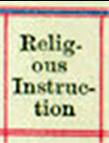
Column heads on inmate’s literacy or
lack of, are interestingly worded, especially the one ‘Classically Educated,’ which perhaps re-fers to college grads.  Interest in inmate literacy reflects the emerging reformatory movement that had its origins in efforts by pre-reforma-
tory chaplains and other reformers to teach reading and writing for Bible studies. That may be why the next column is ‘Religous Instruction,’ not ‘Affiliation.’ (Ignore ironic misprint.)
Column heads on inmate’s literacy or lack of, are interestingly worded, especially the one “Classically Educated,” which perhaps refers to college graduates.
Interest in inmate literacy reflects the emerging reformatory movement that had its origins in efforts by pre-reformatory era chaplains and other reformers to teach inmates reading and writing as part of Bible study programs. That may be why the next column is “Religous Instruction,” not “Religious Affiliation.” (Ignore ironic misprint.)
The connection between penal correction and inmate education goes back at least to the 18th century. A motto on a wall of San Michele reformatory, founded at Rome in 1704 by Pope Clement:
It is of little use to restrain criminals by punishment, unless you reform them by education.